


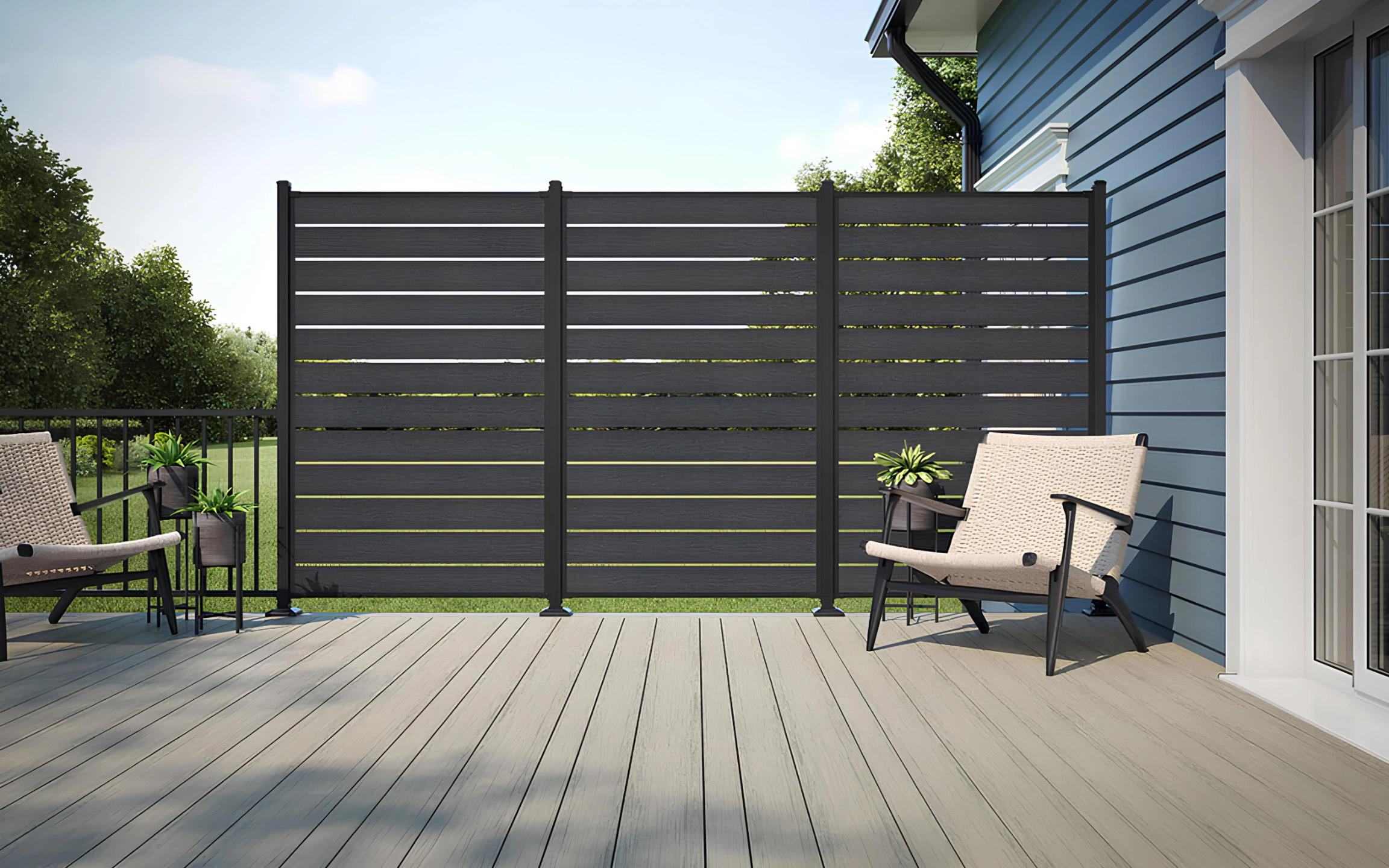
Privacy screens give your deck or patio seclusion, wind protection, and a finished look. But the material you choose determines how the screens perform, how they look, and how much upkeep they need over time.
Aluminum, PVC, and cedar are three of the most common options for privacy screens in Lincoln, NE. Here is how they compare.
Aluminum Privacy Screens
Aluminum is one of the strongest and most durable options for privacy screens. It does not rust, does not rot, and handles Nebraska’s freeze-thaw cycles without warping or cracking. It requires almost no maintenance beyond an occasional rinse.
Aluminum privacy screens come in a variety of styles, including solid panels, slatted designs, and aluminum frames that support other materials. They deliver a clean, modern look that works well with composite and PVC decking.
The main trade-off is cost. Aluminum privacy screens typically cost more upfront than PVC or cedar. But the lack of ongoing maintenance and the long lifespan often make aluminum the most cost-effective option over 15 to 20 years.
PVC Privacy Screens
PVC privacy screens resist moisture, insects, and UV fading without any staining, sealing, or painting. They hold their color year after year and stay structurally stable through Lincoln’s hot summers and cold winters.
PVC works well for homeowners who want a low-maintenance screen that looks consistent over time. The material comes in several colors and profiles, so it fits a range of deck and patio styles.
PVC privacy screens cost less than aluminum in most cases but more than cedar. They are lighter than aluminum, which makes them easier to install in some configurations. The downside is that PVC does not offer the same natural warmth that wood provides, which matters for homeowners who prefer a traditional look.
Cedar Privacy Screens
Cedar is the go-to choice for homeowners who want natural beauty and warmth. The wood has a rich grain pattern and a warm tone that blends with outdoor landscapes better than any synthetic material.
Cedar also resists moisture and insects naturally, which gives it an advantage over untreated softwoods. It performs well as privacy screens in Nebraska’s climate, though it does require more care than aluminum or PVC.
The maintenance commitment is the biggest difference. Cedar privacy screens need staining or sealing every one to three years to maintain their color and protect the wood from UV damage and moisture penetration. Without that care, cedar fades to gray and becomes vulnerable to cracking and splitting over time.
Cedar costs less upfront than aluminum but more than entry-level PVC options.
How to Decide
Choose aluminum if you want maximum durability, zero maintenance, and a modern look. Choose PVC if you want low maintenance with a moderate budget. Choose cedar if you want natural warmth and are willing to maintain the wood regularly.
All three materials work as standalone privacy screens, screen walls, or privacy panels depending on your layout and design preferences. Fixed louvered privacy walls are another option for homeowners who want airflow control along with visual seclusion.
Get the Right Privacy Screens for Your Property
The best material depends on your budget, your maintenance tolerance, and the look you want. All three options add seclusion, wind protection, and finished style to your outdoor space. Black Label Deck & Outdoor Living designs and installs custom privacy screens in aluminum, PVC, and cedar for homeowners in Lincoln, NE. Call +1 402 730 6333 to schedule a consultation.