


Your deck’s surface boards get all the attention. They are what you see, walk on, and clean every year. But the real strength of any deck lives underneath, in the deck framing. Joists, beams, ledger boards, and posts carry the weight of everything above them. When the deck frame fails, the entire structure becomes unsafe.
Lincoln’s climate puts serious stress on outdoor structures. Hot summers, freezing winters, moisture, and snow loads wear down framing materials over time. Here are the signs that your deck framing needs professional attention.
Visible Rot or Soft Spots in the Framing
Wood deck framing is vulnerable to moisture damage, especially in areas where water sits or drains slowly. If you see dark, discolored sections on your joists or beams, press on them with a screwdriver. If the wood feels soft or the screwdriver sinks in easily, rot has set in.
Rotted framing cannot support the loads it was designed to carry. Even if the surface boards look fine, compromised framing underneath creates a serious safety risk.
The Deck Feels Bouncy or Unstable When You Walk
A well-built deck feels solid underfoot. If the surface bounces, sways, or flexes more than it used to, the deck framing has likely weakened. This happens when joists lose their structural integrity from rot, insect damage, or prolonged moisture exposure.
Bouncing is especially noticeable in the center of longer spans, where the joists carry the most load. If you feel movement in areas that used to feel solid, the framing needs inspection.
Joist Hangers or Hardware Are Rusted or Failing
The metal hardware that connects your deck frame together is just as important as the wood itself. Joist hangers, post brackets, lag bolts, and ledger fasteners all hold the structure in place. When these components rust, corrode, or pull loose, the connections between framing members weaken.
Check the joist hangers along the ledger board and at every beam connection. If you see heavy rust, missing fasteners, or hardware that has pulled away from the wood, the deck framing connections need replacement.
The Ledger Board Is Separating from the House
The ledger board is the piece of deck framing that attaches the entire structure to your home. It carries a significant portion of the deck’s weight and transfers it to the house frame. If the ledger board is pulling away from the wall, it means the connection has failed.
This is one of the most dangerous framing failures because it can cause a sudden collapse. Gaps between the ledger and the house, water stains on the siding behind the ledger, or visible fastener damage are all warning signs.
Posts Are Leaning, Cracking, or Settling
Support posts hold the deck framing off the ground. When posts lean, crack, or sink into the soil, the entire frame shifts. This causes the deck surface to become uneven and puts extra stress on connections that were not designed to handle lateral loads.
Post problems often start at the base, where the wood contacts the ground or the footing. Proper footings such as helical piers, diamond piers, or traditional concrete footings prevent settling and extend the life of the posts above them.
You See Insect Damage in the Wood
Termites and carpenter ants target wood deck framing, especially in damp or shaded areas. Small holes, sawdust piles near the base of posts, and hollow-sounding wood when you tap on it are all signs of insect activity.
Insect damage weakens the internal structure of beams and joists even when the surface looks intact. A professional inspection can determine the extent of the damage and whether the affected deck framing can be reinforced or needs full replacement.
The Deck Is More Than 20 Years Old
Even well-maintained deck framing has a lifespan. Standard pressure-treated lumber typically lasts 15 to 25 years depending on climate and conditions. If your deck is approaching or past that range and you have never replaced the framing, it is time for a thorough inspection.
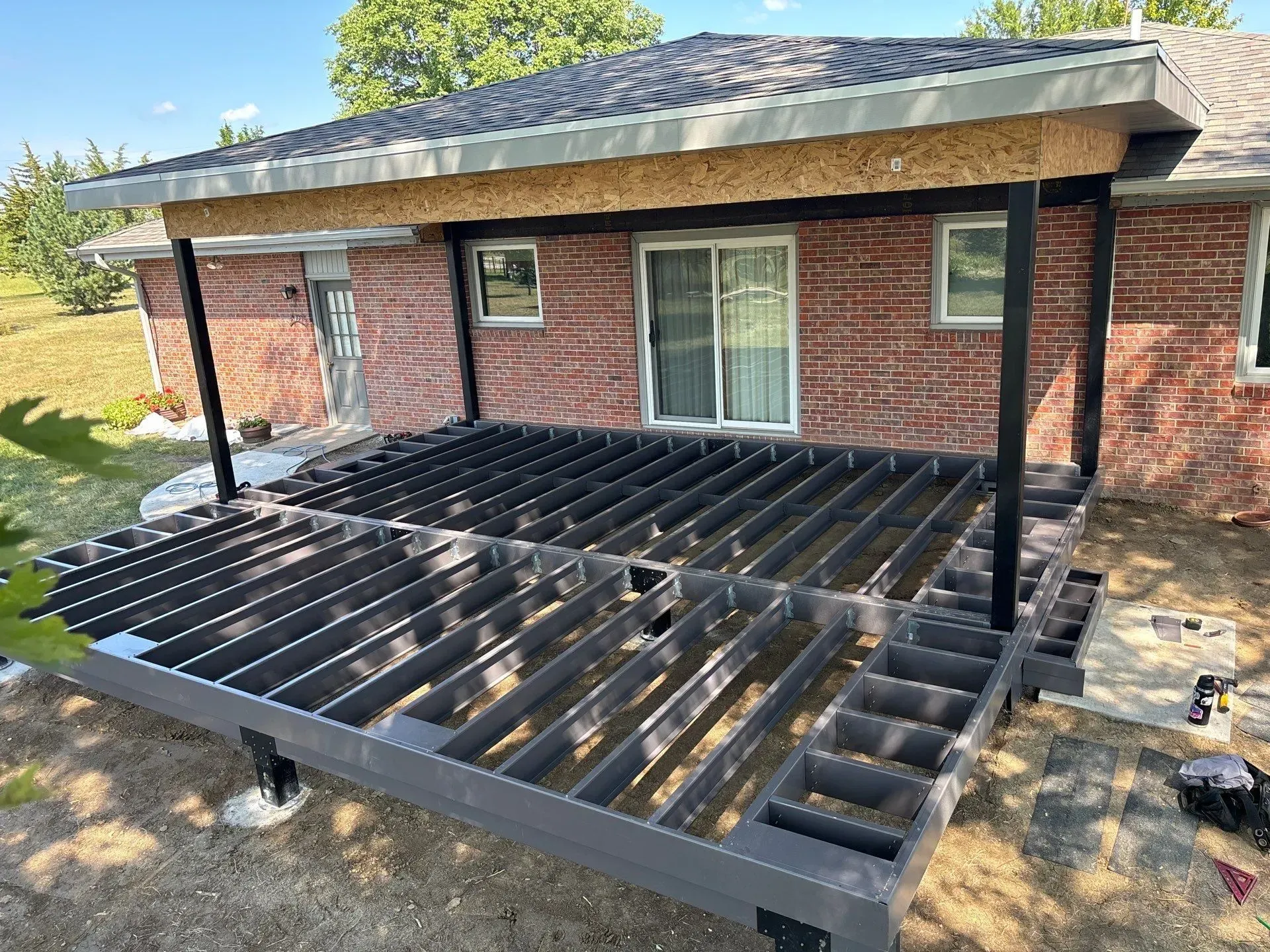
Upgrading to more durable deck framing materials like steel, aluminum, or composite framing extends the lifespan of your next deck significantly. These materials resist moisture, insects, and rot far better than traditional lumber, which reduces long-term maintenance and replacement costs.
Do Not Wait for a Failure
Deck framing problems start small and grow silently. By the time you notice bouncing, sagging, or visible damage, the framing has often been deteriorating for years. A professional deck inspection catches issues early and gives you clear options for repair or replacement before a safety problem develops.
Black Label Deck & Outdoor Living inspects, replaces, and builds deck framing in wood, steel, aluminum, and composite for homeowners in Lincoln, NE. Call +1 402 730 6333 to schedule an inspection and make sure your deck’s structure is sound.