


Most Lincoln homeowners sign a deck contract with only a vague sense of what the next month will look like. The crew shows up at some point, the deck takes shape over a few weeks, and the timeline feels like a black box until the work is suddenly done. Knowing the actual week-by-week sequence removes that uncertainty and helps homeowners plan around their deck installation projects with confidence.
This guide breaks down what really happens during a professional deck installation in Lincoln, from the permitting phase through the final walkthrough. Every project varies based on size, weather, and complexity, but the core sequence stays consistent across nearly every build in the area.
Week One: Permits, Planning, and Final Design
The first week of any deck installation rarely involves visible work on the property. Instead, the contractor finalizes the design, locks in material selections, and submits the permit application to the City of Lincoln building department. The application includes detailed plans showing footing locations, framing layout, beam and joist sizing, and the connection details that satisfy current Nebraska residential code.
This week also includes the final design consultation and 3D modeling review, where the homeowner signs off on layout, materials, railings, and any features like covered sections or built-in seating. Permit approval in Lincoln typically takes one to two weeks, so this phase often overlaps with material ordering. A well-organized contractor uses this waiting period productively rather than letting it stall the schedule.
Week Two: Site Preparation and Footings
Visible work begins once the permit is approved. The crew marks footing locations, clears the build area, and handles any excavation the site requires. Lincoln sits in a climate with a frost line around 42 inches, so footings must extend deep enough to prevent frost heave from shifting the structure during Nebraska winters.
The contractor selects from traditional concrete footings, helical piers, or diamond piers depending on the soil conditions and engineering requirements of the specific lot. The City inspector verifies footing depth and placement before any concrete pours or piers get set. This footing inspection is the first official checkpoint of the deck installation, and skipping it creates serious problems down the line.
Week Three: Framing and Structural Inspection
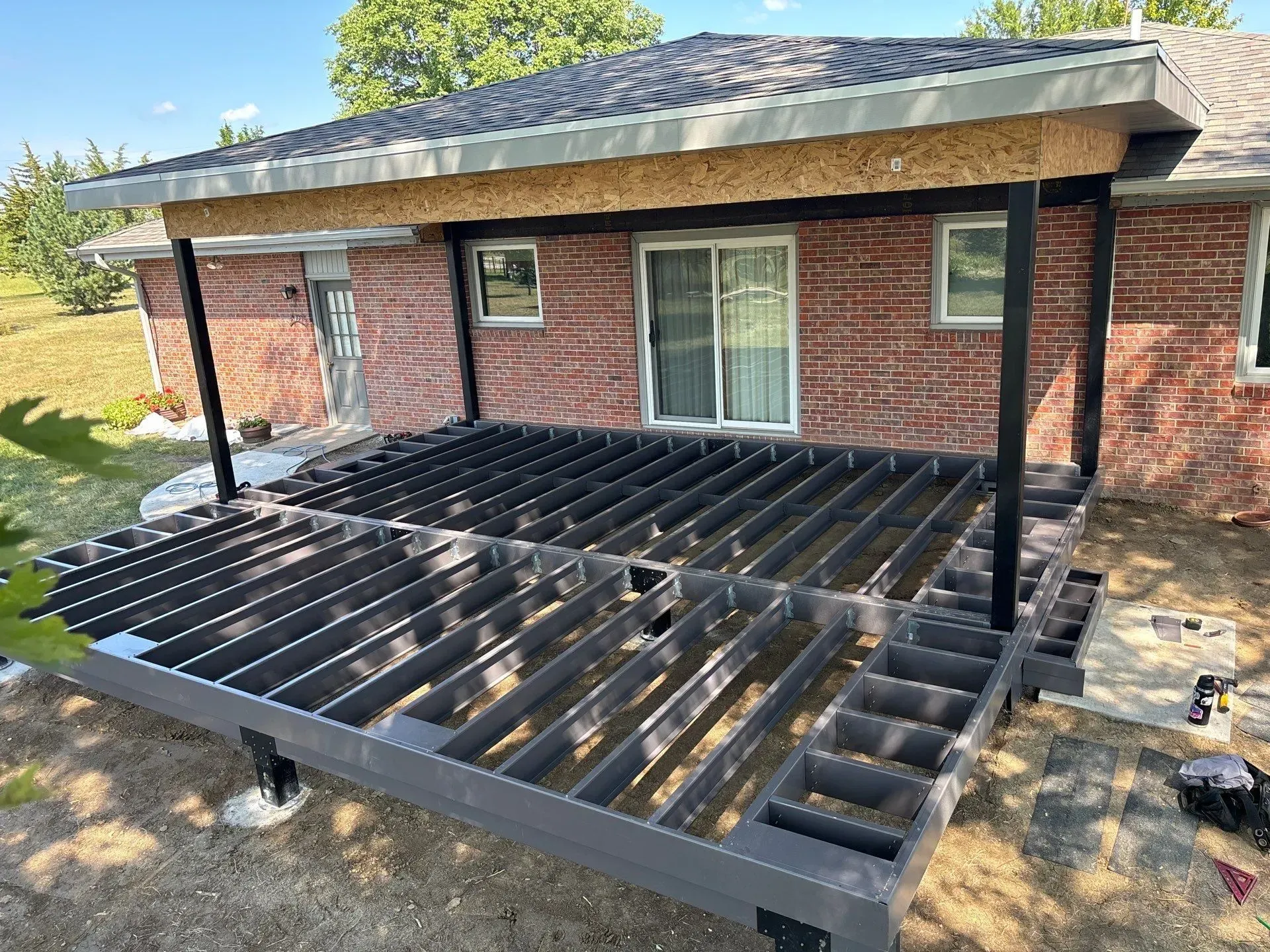
The third week is where the deck starts to look like a deck. The crew sets posts on the footings, installs beams, attaches the ledger board to the home with proper lag bolts and lateral load connectors, and frames the joist system that supports the surface. Framing material options include pressure-treated wood, steel, aluminum, composite, and PWT engineered lumber from brands like Fortress, ProWood, TimberTech Aluminum, and KDAT.
A second City inspection follows framing completion. The inspector checks ledger attachment, joist hangers, beam sizing, post connections, and lateral load hardware against code. This structural inspection must pass before the crew installs a single surface board. A quality deck installation never skips ahead, since covering unapproved framing means tearing it back open later at the homeowner’s expense.
Week Four: Decking, Railings, and Finishing
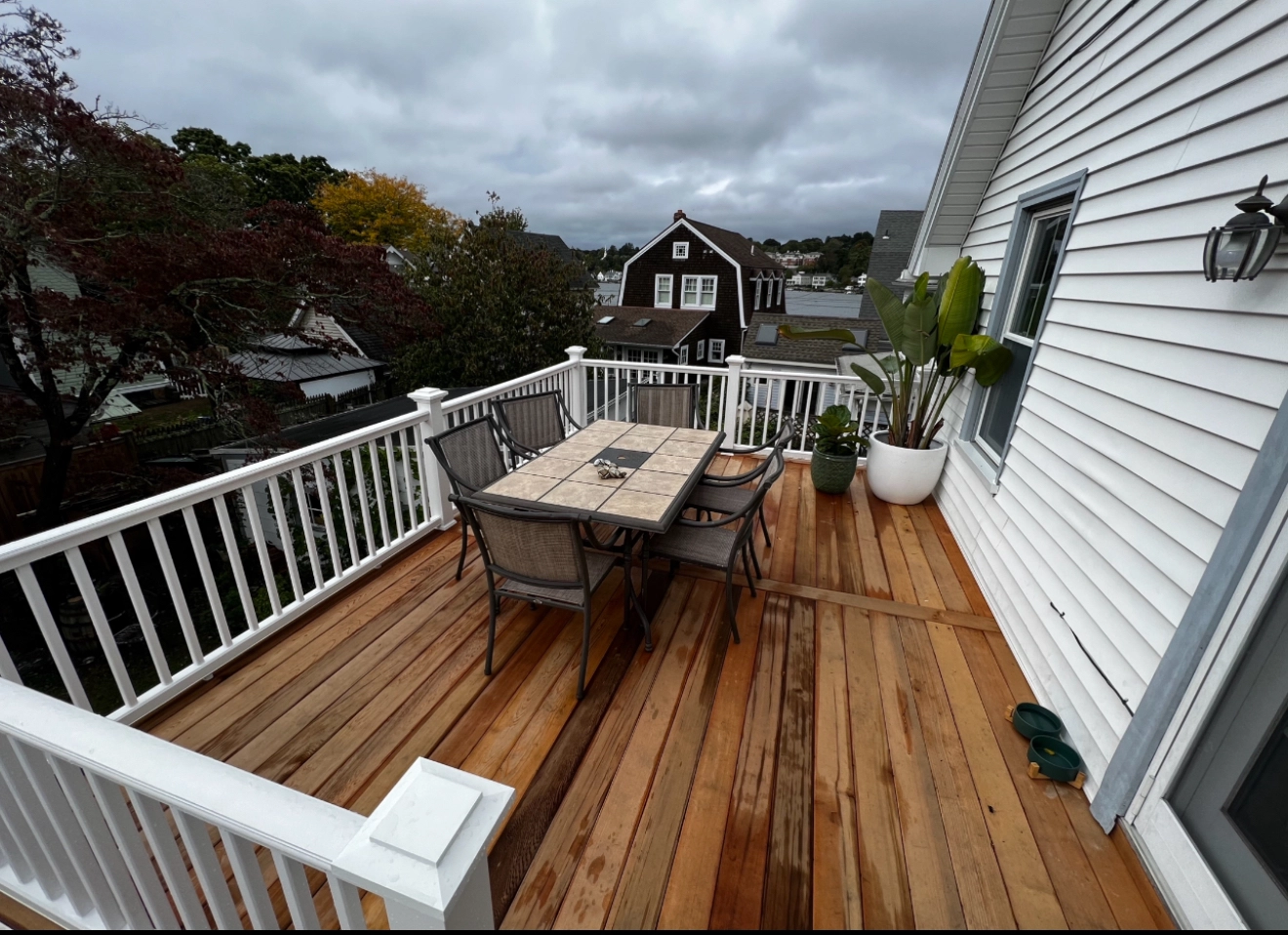
The final week brings the deck to completion. Surface boards go down first, with material options including cedar, exotic hardwoods like Ipe, composite, and PVC from brands such as TimberTech by Azek, Fiberon, MoistureShield, and Deckorators. Each material has specific fastener and spacing requirements that affect both the look and the long-term performance of the finished surface.
Railings follow the decking and bring the structure up to code for any deck more than 30 inches above grade. Black Label installs aluminum, steel, cable, glass, and wrought iron railing systems from brands like Westbury, Viewrail, Keylink, and Barrette Outdoor Living. Finishing details round out the deck installation, including skirting, stair construction, and any lighting integration planned during the design phase such as step lights and post cap lights.
Final Inspection and Homeowner Walkthrough
The City inspector returns once construction wraps to perform the final inspection. This checkpoint covers railing height, baluster spacing, stair geometry, fastener type and spacing, and the overall structural integrity of the completed deck. A qualified contractor walks the inspector through the project and resolves any questions on the spot rather than scheduling a return visit that delays closeout.
The homeowner walkthrough follows the final inspection and covers material care, warranty registration, and maintenance guidance for the specific products installed during the deck installation. Black Label also performs its own deck inspection throughout the build, catching any issues well before the City inspector arrives. For expert deck installation in Lincoln and across the surrounding Nebraska communities, contact Black Label Decks & Outdoor Living at (402) 730-6333 to schedule a consultation and start your project with a clear plan from permit to walkthrough.